Advocate Across the Table: How Loan Market’s Megan Brown Is Rewriting the Home Borrowing Experience
New Title
New Title
'Average' Home Loan Broker or Trusted Advisor . . . Which Would You Rather Have In Your Corner?
When a home buyer hopeful walks into a bank or other class of lender to apply for a mortgage, the power dynamic is a classic imbalance from the outset.
The lender asks the questions. But the home buyer – unless especially seasoned and well-researched – has very little idea what to ask the lender. The borrower-buyer is in a passive, submissive role – largely by default . . . by a completely understandable lack of expertise.
That imbalance can cost the home buyer dearly . . . tens of thousands of dollars (or more) over the life of that home loan. More often than not, for a first-home buyer, or perhaps a credit history-challenged applicant – it determines whether a loan will even be granted at all.
A Coming of Age for the Home Loan Brokerage Sector
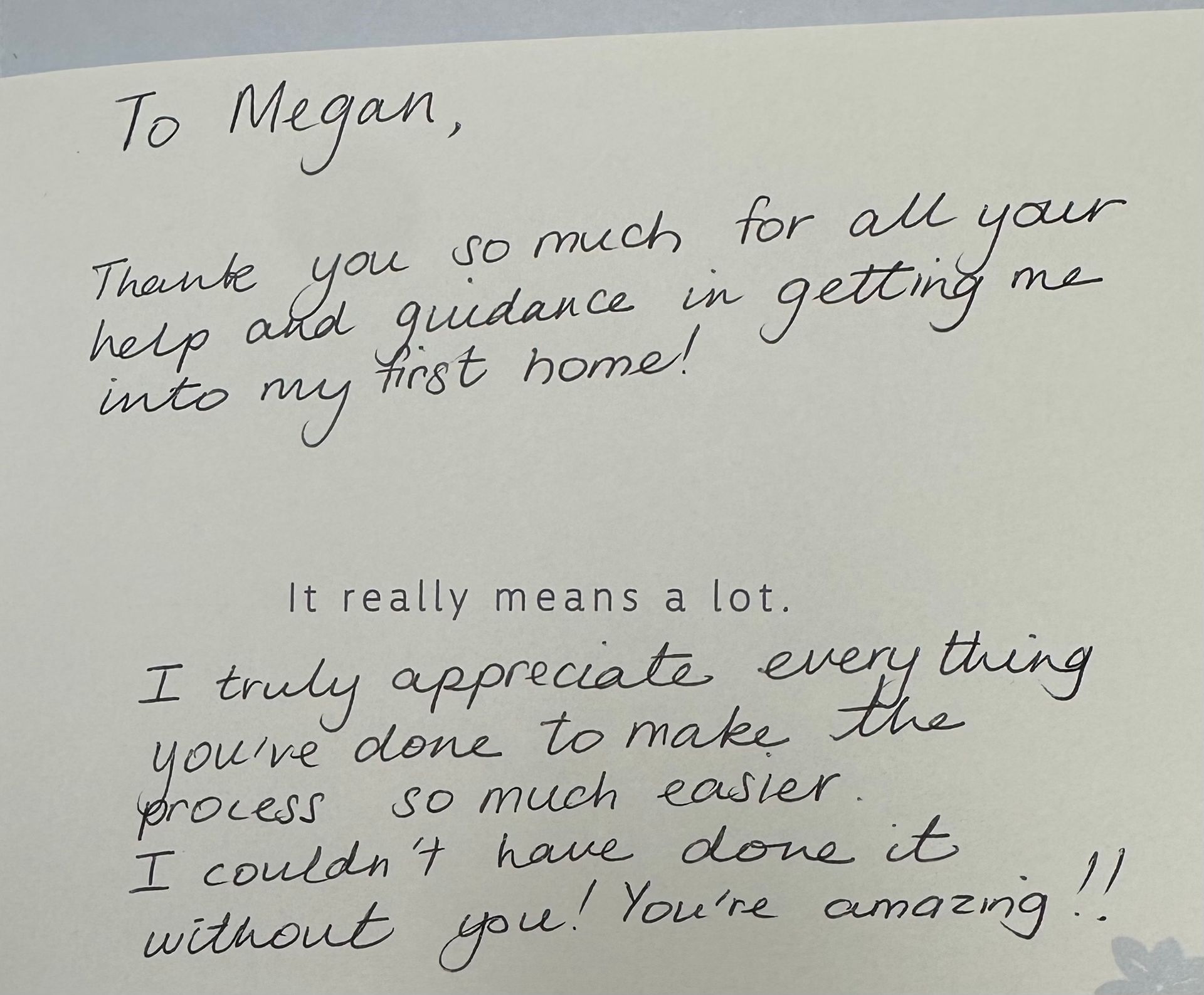
According to home loan broker, Megan Brown of Wairarapa’s Loan Market, going it alone represents a very unnecessary, and self-imposed, limitation of options for borrowers . . . and no more so than for the first-time buyer (and other slightly higher-risk categories of borrower e.g. the self-employed, the credit-challenged, or the high Loan-to-Value case).
“In reality, the person who walked into their bank and were met with a refusal, might have walked into another bank 20 metres down the road and received an enthusiastic welcome . . . if they had the skill, the confidence and the staying power," says Megan.
“That’s where the broker comes in, because that exact scenario represents one of our core functions on behalf of a client . . . far from the only one, but certainly a very common one.”
In recent years, however, borrowers at large are now recognising the distinct and direct value of loan brokers in turning the tables on the lender/borrower power imbalance: There has been a massive market shift in favour of the use of home loan brokerages in just the last half a decade. In 2019, fewer than 40 percent of borrower-buyers used mortgage advisors. As of 2026, 60 percent of all new home loans are written through a mortgage advisor; indeed, a near-meteoric rise in the proportion of borrowers refusing to limit their options to their own bank or to banks in general.
The ‘Human Factor’
“The surge in our sector in the last six or seven years is, I believe, also directly attributable to the fact that the major trading banks have steadily retreated from local communities, shutting physical branches and forcing clients onto generic call centres and rigid digital portals.
“People want to talk to people when it comes to their finances and a big subject like their home loans,” Megan explains. “People are nervous about putting their financial information online. People are not as open to that. People like to speak to you and weigh you up first.
“Even though we send out forms to pull together basic information, my clients will have spoken to me first and there will have been a level of personal trust established before they are asked to disclose personal information. And if they don’t want to fill in a form they can come in and work through it with me.
“It’s a whole different attitude and approach than that of a bank or online applications.
“And people are also nervous when it comes to such a big financial commitment, they want to know they’re not being set up to be hoodwinked somewhere down the line. People want to know they can trust what they’re putting themselves forward for.
“When you’re talking hundreds of thousands of dollars you need to know you’re asking the right questions. But the lopsided power dynamic when a borrower is all alone representing themselves, is such that even if people do know what they should be asking they often fear to ask or don't know how or who to ask . . . and that can be very, very costly."
Turning the Tables on the Traditional Lender/Borrower Dynamic
For Megan Brown, dismantling the imbalance in the borrower/lender dynamic is the entire foundation of her practice at Loan Market Wairarapa.
“When you go to a bank, they’re asking YOU the questions. If you don’t know what questions to ask THEM, they have all the control. They hold the cards.
"And also, your life might not fit neatly into their rigid internal boxes."
But within the home loan brokerage sector itself, there are your standard mortgage brokers and then there are true trusted advisors . . . and while borrowers are certainly now beginning to recognise the power of the home loan brokerage sector in general, they often don’t know how to size up a mortgage broker, or “advisor” at the individual level.
The Transactional Broker vs the True Trusted Advisor
Small change in terminology, big difference in practice and in outcome.
Education and preparation are at the heart of getting the best outcome from a loan application, says Megan.
“A really good broker will start by educating the borrower, first and foremost in terms of their true borrowing capacity. For example, a lot of people think that nowadays you need a 20 percent deposit. But that’s not always true; there are circumstances in which a borrower can viably go with as little as five percent. That’s where meticulous preparation kicks in . . . to demonstrate to a lender that a 95 percent loan is financially justified and serviceable by that borrower, if that is indeed the case.
“Then there’s the all-important consideration of how to structure a loan to fit the borrower’s goals and lifestyles. If a broker has more of a transactional mindset rather than functioning as a true trusted advisor, they’re not going to get the optimal outcome for that client, because they don’t understand what the optimal outcome actually looks like within the framework of their life, goals and visions.
"It goes well beyond the current figures on their bank statements and balance sheets. For example, whether a client is best advised to opt for an interest and principal, or an interest only, loan is not a decision to be limited to pure, present-day commercial factors. A genuinely personally invested advisor will actively appreciate that it’s a decision that should factor in the client's future goals as well as simply their immediate capacities. And that it should factor in contingency plans . . . and what those contingency plans look like for that client, not (at best) some generic equation printed in a template.
“Looking at just these most basic of considerations, you can very easily see how people’s individual circumstances can differ massively even when they are applying for the same amount for the same type of purchase. And further, when you take the time and care to extrapolate out the implications of those circumstances across a longer time frame, you can see how an advisor's duty of care goes beyond just the fundamental securing of financing."



The Anatomy of Trust: From Zimbabwe to Chapel Street
To understand why Megan treats client advocacy as a personal duty of care rather than a transactional pipeline, requires understanding the lived experience that forged her perspective on financial vulnerability.
In 2002, Megan arrived in New Zealand from Zimbabwe. Back home, her family had run a highly profitable engineering firm and a hardware business alongside their equally profitable farm. When political instability forced them to leave, they arrived with virtually nothing.
“We couldn’t bring any of that with us,” said Megan. “We had to pull together with our extended family – my Mum and Dad – and my sister and her family, and rely on that family tightness and reliance to re-establish ourselves and build back up in a whole new country and business environment.
“When you go through an experience like that, you really appreciate just how precious the few people you have to rely on, are to you. That’s a statement of my family values and the importance of integrity, both before but certainly after, and now.”
The relevance of that hard-won, lived experience is this:
“If a borrower is going to trust me with their mortgage, you can be very sure I know what that level of trust means – both to them and to me.”
Putting Down Roots In the Wairarapa & ‘Finding Her Thing’
Three months after her 2002 arrival in Masterton, Megan and her husband (now the Principal of Whareama School out near Riversdale) and her “two under two” moved to Marton for a decade before returning to the Wairarapa in 2012.
Within that period, the family continued an on-the-ground association with Masterton through their ownership and operation (primarily by Megan’s mother, who remained here) of the Kuripuni Post and Lotto shop. Working full-time in Marton but spending weekends back in Masterton behind the shop counter to relieve her mother, Megan found that the operation held an unexpected spark for her, in the form in-store Kiwibank agency.
“The Post Shop had a KiwiBank. It ignited something in me, to see people handling and trying to grow their own finances. When you open up accounts, you start to see people embarking on their goals, and many people will talk to you about how they want to move forward.
"You can perform that role in a very perfunctory, detached manner, or you can really put yourself into it, and really find the best account for them. For example, if they took this account, they’re getting charged $10 per month . . . or this one over here is lower interest but no fees, etcetera.
“Even at that level, in that little outlet, there was the capacity to help put people on their path to security and independence.”
When the family sold the Kuripuni business, Megan initially transitioned into investment advisory in Masterton, phoning clients with portfolio updates, conducting KiwiSaver reviews, and assessing life-stage risk profiles.
Yet, the long-term, passive nature of fund management felt limiting compared to the beneficial impact she knew she could make to people in terms of their immediate, tangible needs – primary of which was often, and even usually, based around real estate financing.
“When we had sold the Post and Lotto shop, I thought that love of helping people with their finances through account selection and establishment would flow naturally into investment advising,” she remembers. “But doing a lot of phoning clients and letting them know how their portfolios were performing . . . and doing quite static KiwiSaver performance reviews and life-stage risk profiling . . . yes, important, but what about the now factor? I had such a lot more to contribute and I needed to.
“I just knew that if I was in a capacity where I had more immediate scope to help people achieve their goals as opposed to being limited to only long-term investing advice, that and my ability to move and flow with the cut and thrust of dynamic markets . . . keeping my finger on the daily pulse of finance and property . . . would see me able to have a far bigger and more immediate impact on those very same clients.
“So yes, I was restless. I could now see my ultimate ‘thing’ . . . where all my skills, background, passions and my lived experience came together to make a truly and competitively superior contribution both to a specific industry and to the clients it serviced or could be servicing.”
Strength in Numbers: 60 Lenders vs the Single Bank Agenda
Joining the Loan Market national network’s Wairarapa franchise in 2025 alongside colleague Matt Spicer, Megan competes against other brokerages with a regional presence, such as Mike Pero, New Zealand Home Loans, Mortgage Express, Squirrel, and fast-growing operations like Opes Mortgages.
Far from being intimidated, she welcomes the competition; it gives those borrowers who shop around between brokerages a benchmark for comparison . . . and Megan knows where they will rank her if they experience the way she works with them.
Her personal brand of service often extends to the time-consuming nitty gritty of helping new home buyers get their personal finances in order before they even get to the application stage.
“Preparation and education go hand-in-hand; they’re often inseparable, particularly with younger people just starting out or just getting onto the property ladder. That’s one place that ‘going the extra mile’ takes a willingness to really put the time and effort in, not just smile a bit wider or contact an extra bank or two.”
Megan’s clientele also enjoy a serious advantage in the form of the sheer breadth of choice the national Loan Market operation delivers to the borrower: access to over 60 different bank and non-bank lenders.
“In terms of the national home loan sector, Loan Market has one of the greatest variety of lender types and within the different categories of lender, the greatest variety of organisations.
“We see readily that some lenders are better than others if, for example, you’re trying to get yourself out of a challenging credit history. Some are better for reverse mortgages. Some are better for those over 65s who are wanting to undertake home improvements to sell or install double glazing to lower their power bills.
“And there’s an even wider variety of considerations that fold into people’s unique circumstances. Some people will be at maximum borrowing capacity on their house, but will need a vehicle for their business . . . and it could really hamstring their business or prevent business expansion if they can’t get it.
“Each lender will have a different attitude and a different risk profile.
"Imagine the lone borrower out there in a huge marketplace of options, trying to figure all that out for themselves. It would take years of research, trial and error.”
The other hallmark of a broker who’s a trusted advisor vs a transaction-based operator is their willingness to be completely uninfluenced by the size of the commission – because it is, of course, the lender who pays the broker.
“The determination to secure the right fit for the client has to be stronger than pushing a single lender’s agenda. The broker must always be trying to get the very best opportunity for the client.
“A good broker will do that by default, by virtue of the personalisation of approach to you and your circumstances.
"If you and your neighbour were coming to me for the same amount for the same type of purpose . . . you and he will almost certainly have a completely different lending scenario . . . you have to find the right fit for the client . . . so if you’re doing your job well you’re always working for the client, not the bank.
“And that’s a critical point of assurance, because once you’ve signed up for something as committal as a mortgage . . . once you’ve signed on that dotted line . . . you’ve made your bed and even if you want to review it down the track, you’re still lying in that bed for a good amount of time.”
Life Cycle Servicing versus Transaction-Based ‘Loan-Getting’
“A lot of people have a loan with their bank and stay there for 20 years,” says Megan.
“But in that 20 years things might have changed markedly – in their own lives, in the general economy, and in the world at large.
“Refinancing might be a smart move to make. Some banks will be keen to get that sort of business, and others will charge a prohibitive refinancing fee.
“Or you might want to install solar power on your home but you might be banking with a bank that doesn’t have a green energy policy. But we’ll know where there’s a bank that’s big on that and we can get you a fabulously low interest rate.
“Or if you’re planning a big renovation and want to boost your budget for that, some banks are really encouraging of that.
“How can you possibly know all that? It’s not your day job. It’s not even just a research job. It’s knowing how those banks have come about adopting those specific policies, whether they’re real, substantial and lasting, or whether they’re just a bait-and-switch special of the month and you’ll potentially take all your business there to find yourself no better or even worse off than where you were with your old bank.”
“This is where a really diligent home loan broker comes into their own, because it’s not just knowing the risk profiles and having contacts with all the different banks and other lenders, it’s about knowing their inner workings, cultures, and how stable and reliable those policies and practices are.
“Whatever stage of your financial life you’re at, you need to have confidence in whomever is guiding you . . . and in that sense it’s not only about accessing the far wider choices of lender that a broker can provide you, it’s also about making sure you are dealing with a broker who makes it their daily modus operandi to have their finger on the pulse of lenders at a deep and knowledgeable level across their entire portfolio of potential lenders.”
The Wairarapa Landscape: First-Home Buyers, Downsizers, Upgraders, Lifestylers & Investors
The property market across Masterton, Carterton, Greytown and South Wairarapa is navigating specific regional shifts, with distinct dynamics across borrower profiles.
“Right now the property market is stagnant,” Megan observes. “You’d think that this would be a great time for people to invest, but it’s also an election year so a lot of people are nervous about what new regulations might be introduced.”
Observing the buyer segments, Megan provides the following commentary on the national property scene:
- First Home Buyers: This segment remains resilient, accounting for roughly 25 percent of all new mortgage lending in New Zealand, with average loan sizes sitting around $560,000. With investors quieter in recent years, first-home buyers have capitalised on reduced competition.
- Downsizers (Retirees/Empty Nesters): This market segment also includes those unlocking equity to manage living costs. Largely cash buyers or low-level borrowers, they frequently compete directly with first-home buyers for single-level new builds and low-maintenance townhouses.
- Movers (Upgraders): While listing inventory gives buyers choice, movers remain heavily constrained by bank serviceability test rates and the challenge of selling existing homes in a softer market.
- Investors: Slowly re-entering as interest deductibility rules phase back in, but hindered by the maths: high borrowing costs versus current rental yields make cash-flow positive investing difficult.
The Local Perspective
Putting that into the Wairarapa perspective, the first home buyer market is strong in Masterton and Carterton with their more accessible entry-level pricing i.e. the average house value across the Wairarapa region sits at around $561,000 (well below the national average of ~$870,000), with Masterton’s median sale price sitting at $537,000.
“We’re seeing strong activity from young Wellington and Hutt Valley families priced out of the city,” Megan observes.
“With flexible/hybrid work now a normal practice and the train connection available, young buyers are actively using KiwiSaver and low-deposit bank options to secure three-bedroom character homes and standalone properties here.”
Meanwhile, Carterton, Greytown, and Masterton remain prime destinations for older homeowners cashing out of higher-value family homes in Wellington or Auckland to fund retirement.
“Downsizers in the Wairarapa are predominantly cash or low-LVR (Loan-to-Value Ratio) buyers.
“That makes them largely immune to high mortgage interest rates, but it also means they’re actively competing with local first home buyers for the likes of low-maintenance, single-level townhouses near the centre of town.
“In Martinborough and Greytown, this downsizer and semi-retiree market is a primary driver of property values, keeping prices in South Wairarapa higher than in Masterton.”
On the other side of the coin, Wairarapa families looking to trade up are seeing plenty of listing choice, but many are held back by bank serviceability test rates and the need to sell their existing home first in a cautious market.
And as far as the property investment scene goes, Megan says Masterton currently offers relatively strong gross rental yields at ~5.1% (based on median rents around $530/week against a $537,000 median house price).
“While yields are far better here than in Wellington City, high interest costs mean cash-flow positive investing remains tricky. That lower level of investor competition is good news, of course, for first home buyers.”
Value-Added: The Advisory Relationship Starts (or Should Start) Well Before the Application
To ensure clients do not overpay in a fluctuating market, Megan utilises commercial property intelligence and valuation databases – including Valocity, illion, and CoreLogic Property Guru:
“I have access to portals / databases that the average buyer wouldn’t have access to, that allow me to see whether one of our potential borrowers is looking at paying too much; so I can help with a reality check, and give ballpark assistance with understanding current market values."








Beyond the Dotted Line: The Lifecycle Advocate
If Megan keeps returning to the example of the first home buyer, it's because there are many similarities in starting out and starting over, as she and her family had to do when they arrived, now just over two decades ago, in what was then to them, a totally new and foreign environment.
She has a real heart for those "fresh out the gate".
For those first-home buyers, Megan’s initial focus is breaking down the application into manageable, transparent steps:
“A young 20-something or 30-something, or a single parent might come in, tired of paying rent and wanting to secure a future for their kids as they grow up. We’ll fact-find, thrash out their hopes and dreams, gather up their bald financials, sometimes I’ll help them with basic budgeting to help them increase their deposit.
“I might have to get right into the weeds of helping them at a very granular basic budgeting level, like cutting down their takeaways per week. They might have a $10k credit card limit but be on the minimum wage. I’ll see those red flags from the word go and help them reduce them before we even put them in front of the lender. That increases our choices of lender, rather than have to resort to the highest risk profile lender who might not give you the best deal.
“That level of preparation also cuts out the multiple rounds of questions, forms and approvals that a bank or lender would otherwise subject the young person to . . . I want to ensure the process doesn’t demoralise them or cause anxiety for them.
“That upfront preparation also provides them with leverage when real estate agents probe them as to whether they have pre-approval. Having an adviser who has already pre-screened and structured the file means the buyer enters negotiations with genuine leverage rather than uncertainty.”
And all of that is just the beginning of a much longer relationship.
When a client’s lending is approved, Megan views that milestone not as a transaction concluded, but as the beginning of a long-term professional relationship.
“After they’ve secured their optimum financing arrangement, I’ll put them in touch with the best people for the likes of insurances, if they would like to rely on me for that ongoing type of advice. I want my clients, and especially those starting out, to have no uncertainty about any part of the process – so that by the time they walk through their new front door, all they’re concerning themselves with is what cartons to unpack first and what they’re having for their first meal in their new home."
A Relationship, Not A ‘Transaction’
Megan also has a policy of checking in on my clients – particularly her first home buyer clients – over the longer haul.
“This is not a transaction that just ended. This is a relationship that has just begun. They have just trusted you with everything they own; it doesn’t stop with signing on the dotted line.
“In the early stages of the new loan, I just want to make sure they’re OK, that they’re oriented, and if they’re a first home buyer, that they’re coping with the responsibilities of being a home owner. But across the longer haul, if it’s appropriate and they’re confident to do so, I’ll research the options for renewing their loans with other lenders.
“You have to stay in touch with your clients. There’s such a pivotal contribution you can make at so many different stages of their lives, if you are a truly proactive, invested advisor.”
That goes for whatever is happening in a client’s life (a “client”, by Megan’s definition, being anyone for whom she has, at any time, sourced financing).
“The New Zealand economy has gone through a lot of tough times. If someone is struggling they often don’t want to open up about that . . . but to lose their home without having gone back and spoken to their broker is heartbreakingly unnecessary, and I don’t want that to be any of my clients.
“And it can happen, especially in the early stages of home ownership, and even more especially if the economy is volatile. Going from renting to owning is a big shift. It’s a great shift, but it’s not without unforeseen challenges.”
Financial Life Is An Ever-Changing Journey
“In short, I view my clients as individuals or families at a certain point in their lifecycle as a homeowner, whether that be the first home buyer, someone making the move from residential to lifestyle, someone downsizing, someone moving into a retirement village, or someone building an investment portfolio.
“Whoever is sitting in front of me is an individual, a family or a business moving through the journey of their own life, and there’s a tapestry they want to weave with that life.
“I want to understand all the threads. And I want to be on that journey with them, either in the background or in the foreground when they need me . . . to help them weave it in the best way possible when it comes to the big financial decisions in their lives that will undoubtedly facilitate that.”
This profile is an independent commercial showcase. The Publisher accepts no liability for services or transactions entered into with Featured businesses. Read our full Disclaimer.
© 2026 Wairarapa Business Showcase. All rights reserved. This Feature article is protected by Copyright and may not be reproduced elsewhere.