Ammu: Bringing A Fuller Appreciation of Indian Cuisine to Wellington & the Wairarapa
How Special Is THIS Indian Restaurant? How to Even Count the Ways . . .
When diners across New Zealand think of an evening out for Indian food, the cultural default is almost universally North Indian: thick gravies, heavy cream, tandoori meats, and the omnipresent butter chicken. While those familiar classics hold an indisputable place on the Kiwi palate, they represent only a fraction of the subcontinent’s vast culinary geography.
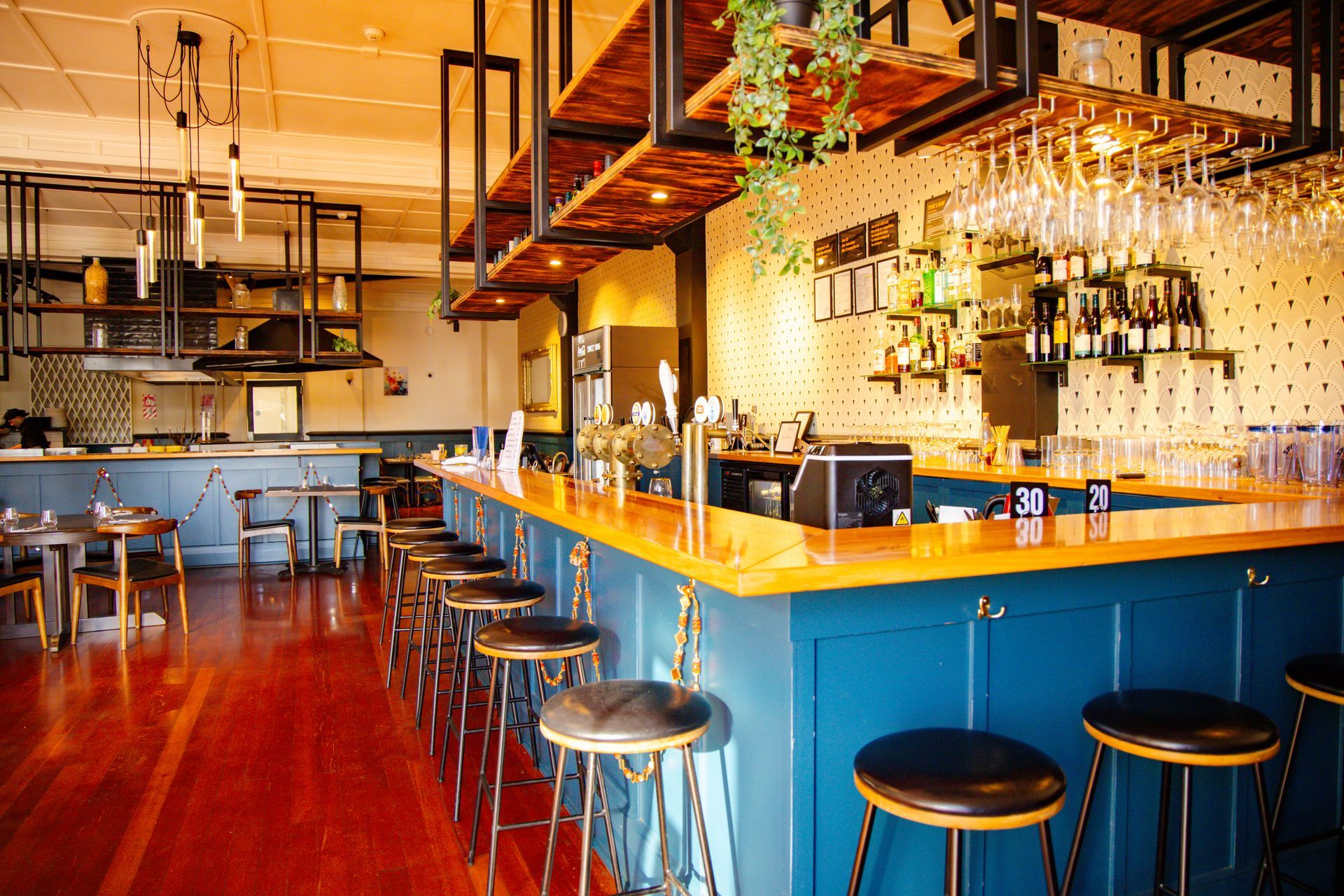
At Ammu – first established in Upper Hutt in 2018 and now making its ambitious Wairarapa debut at 109 Chapel Street, Masterton – the table is set with a unique richness and variety of culinary heritage.
Owned and operated by husband-and-wife team Eldho Paul and Jyothy Prabhakumar, Ammu is ensuring Wellingtonians and now residents of the Wairarapa have a very wide selection of Indian cuisine . . . and especially through the delights of the trademark dishes of their homeland: the South Indian coastal state of Kerala.
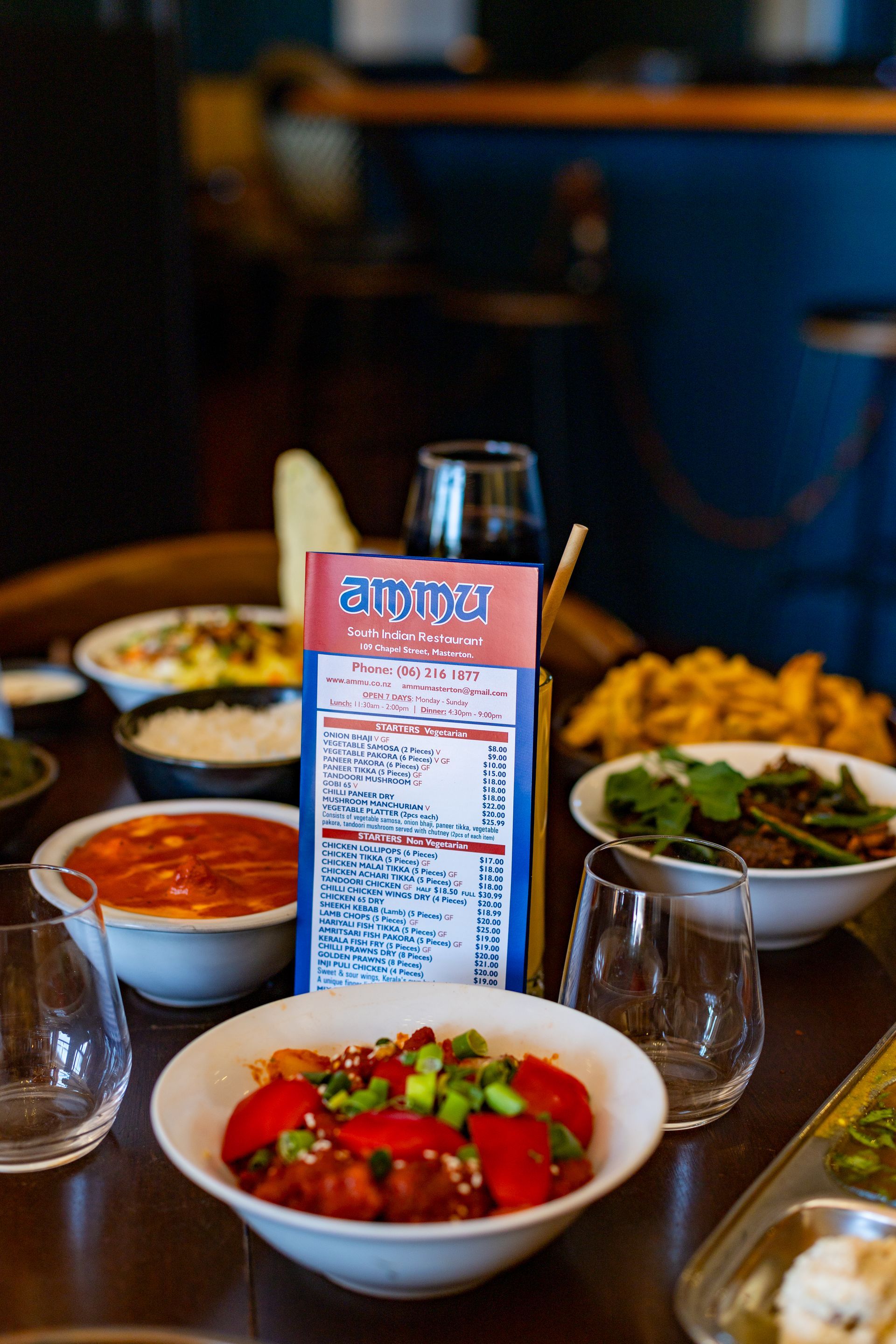
Simply speaking, Ammu is best described as an Indian restaurant with a menu that, while offering all the well-known North Indian curries like butter chicken, tikka masala, rogan josh and korma, places equal emphasis on its range of traditional South Indian dishes . . . most especially those from the proprietors’ beloved home state.
Introducing Truly Authentic SOUTH Indian Cuisine
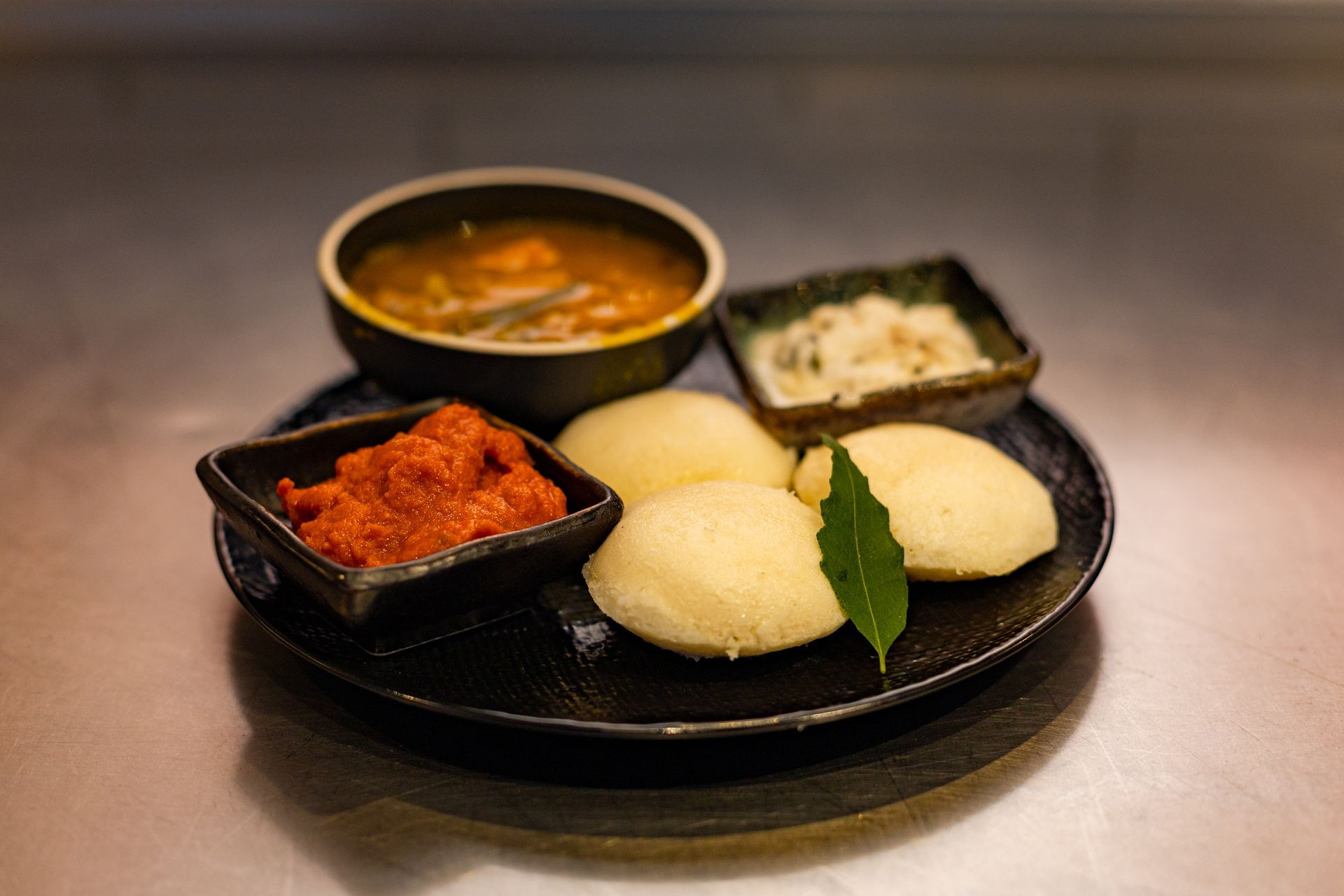
The hallmark of Kerala cooking lies in its aromatic lightness and use of indigenous coastal ingredients. Where North Indian curries lean heavily on cream, butter, and tomato bases, Kerala cuisine draws its character from coconut derivatives.
“The dishes from our region are more coconut-based, whereas North Indian dishes are heavier,” Jyothy explains.
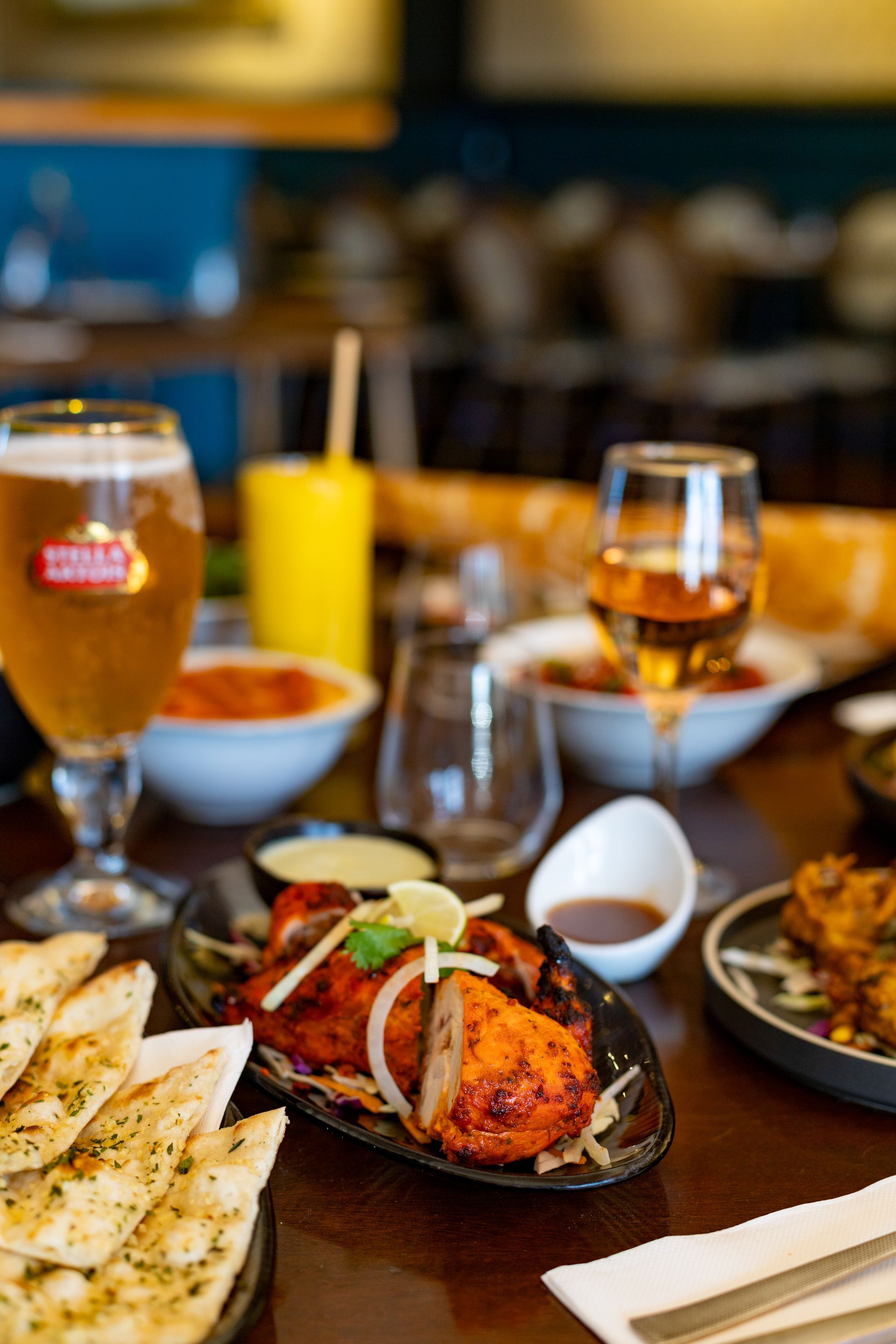
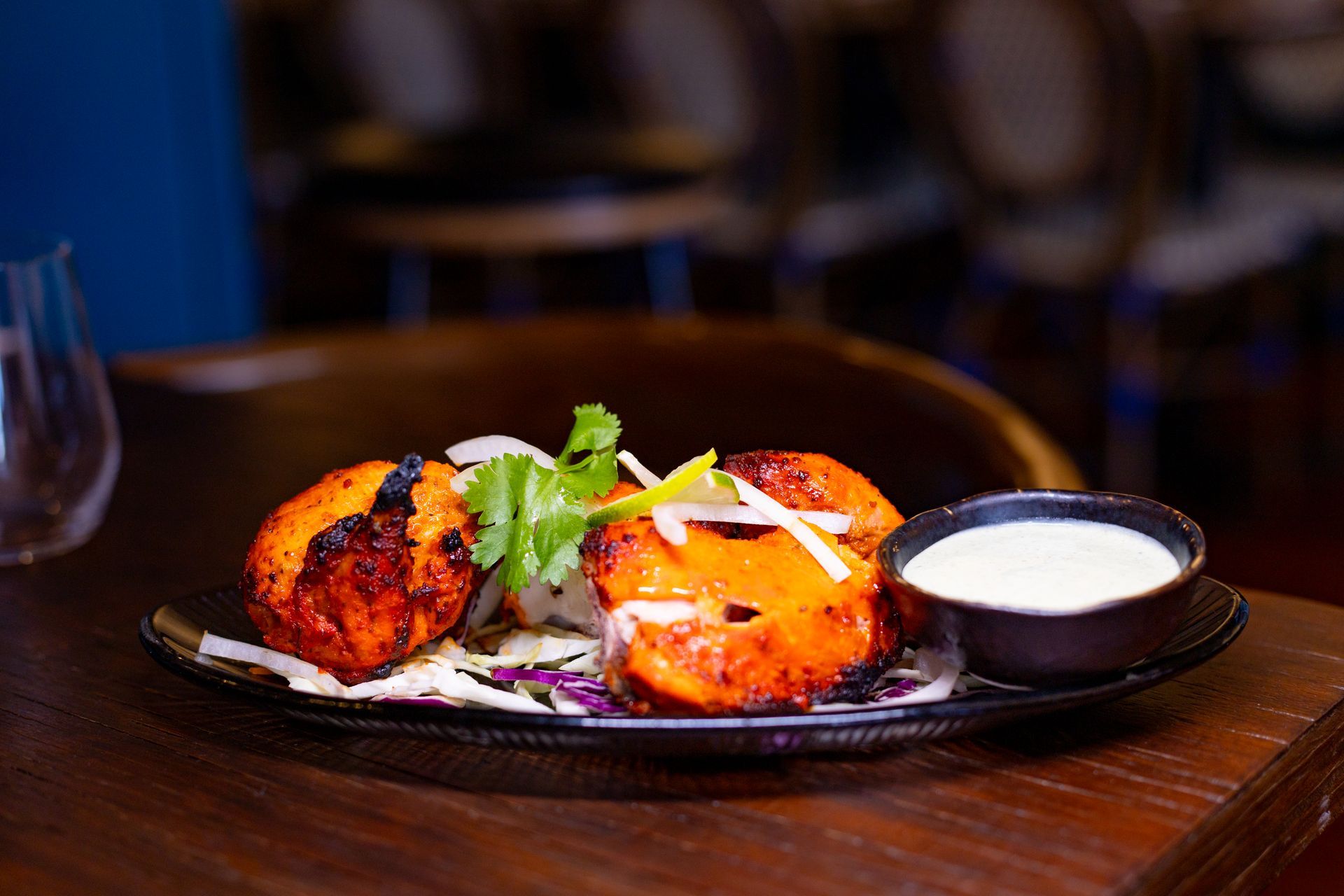
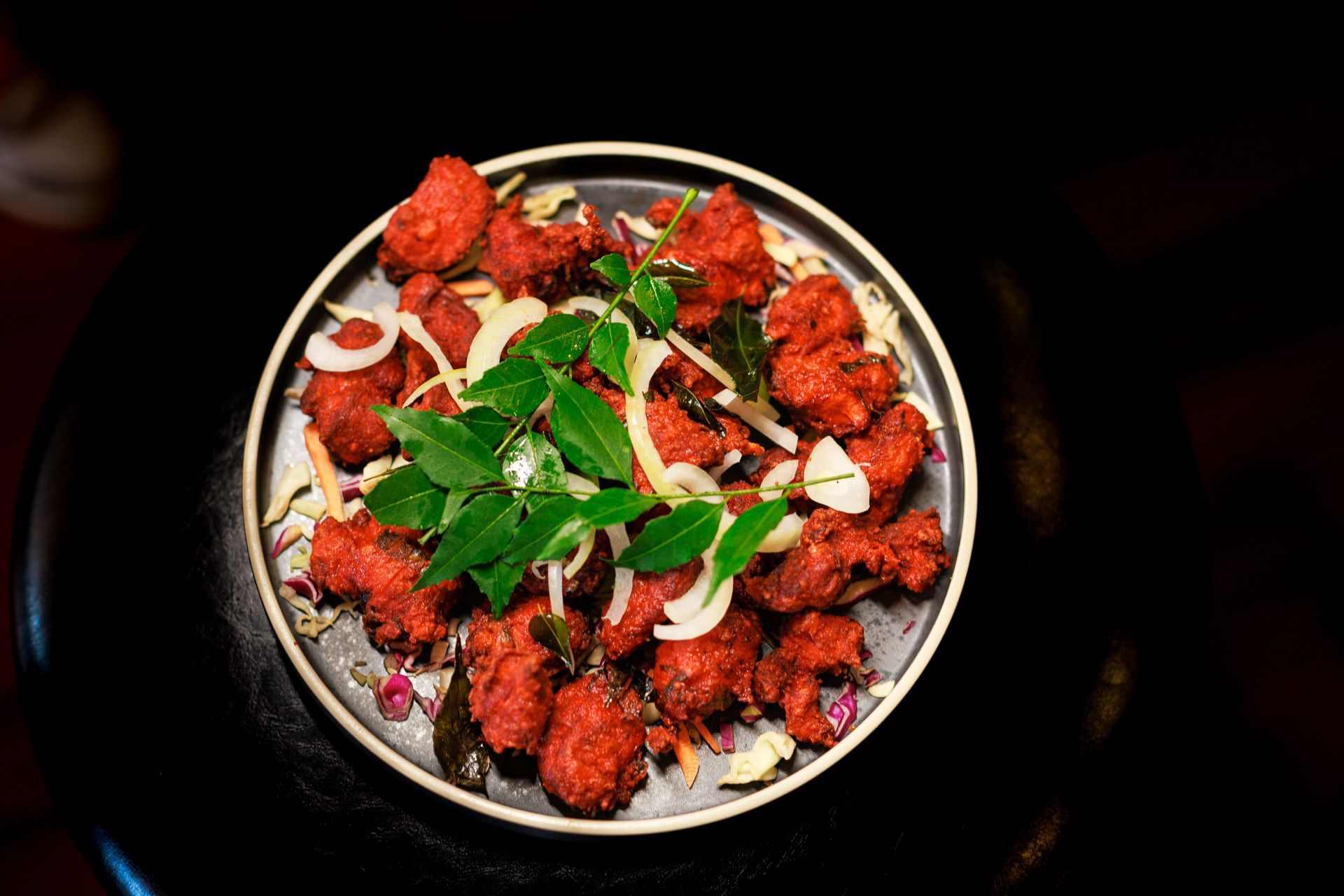
“Popular South Indian dishes are those like goat curry masala and chicken roast (despite its name, this is still very much an Indian curry).
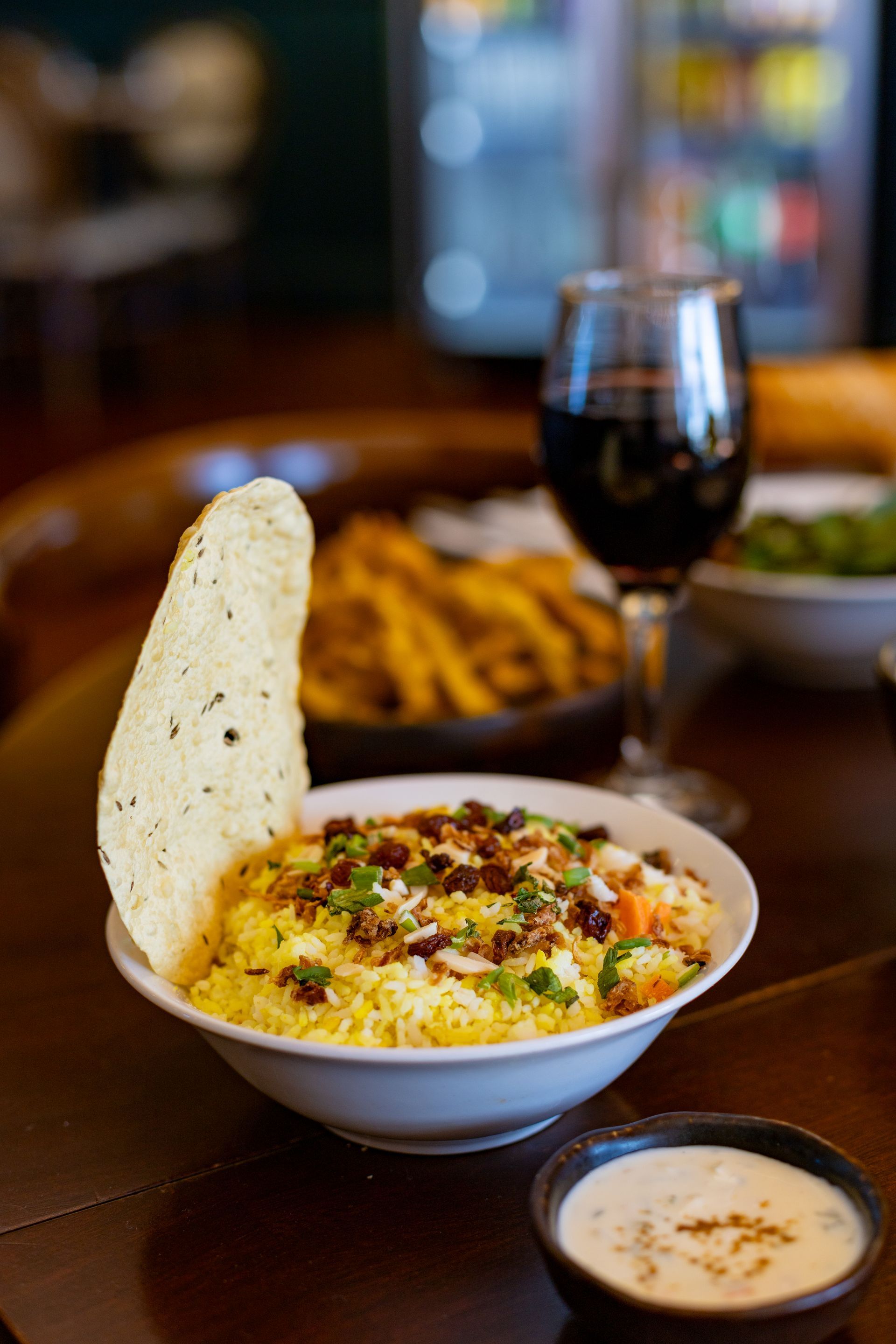
“Ghee rice is something that is becoming more popular here as more locals try it. It’s prepared with a smaller grain rice and cooked alongside certain spices and clarified butter to make even the rice very aromatic.
“One of our local Indian customers told us recently that it is like something her grandmother used to make . . . . which, in the Indian culture is the ultimate compliment, because anything that is like our grandparents would cook would be very authentic and very good.”
South Indian biryanis, too, are different to normal biryanis. For example, in Ammu’s chicken dum biryani, a true Kerala, and now Ammu, signature dish, the chicken is cooked in a special gravy after which the rice is added, “and then the whole thing is sealed in dough that forms an edible lid and that traps the steam inside the heavy pot while it continues cooking to completion, so that all the flavours stay in. The dough seal forces every grain of rice to absorb the intense aromatics and the natural juices of the meat.
“Cooking the rice and the chicken together in the same cooking process produces a richer flavour and real aroma.”
The dish is an especially popular one, Jyothy says.
It’s also one of an ever-growing range of signature preparations that demand intensive, multi-stage labour . . . another being its Dosa.
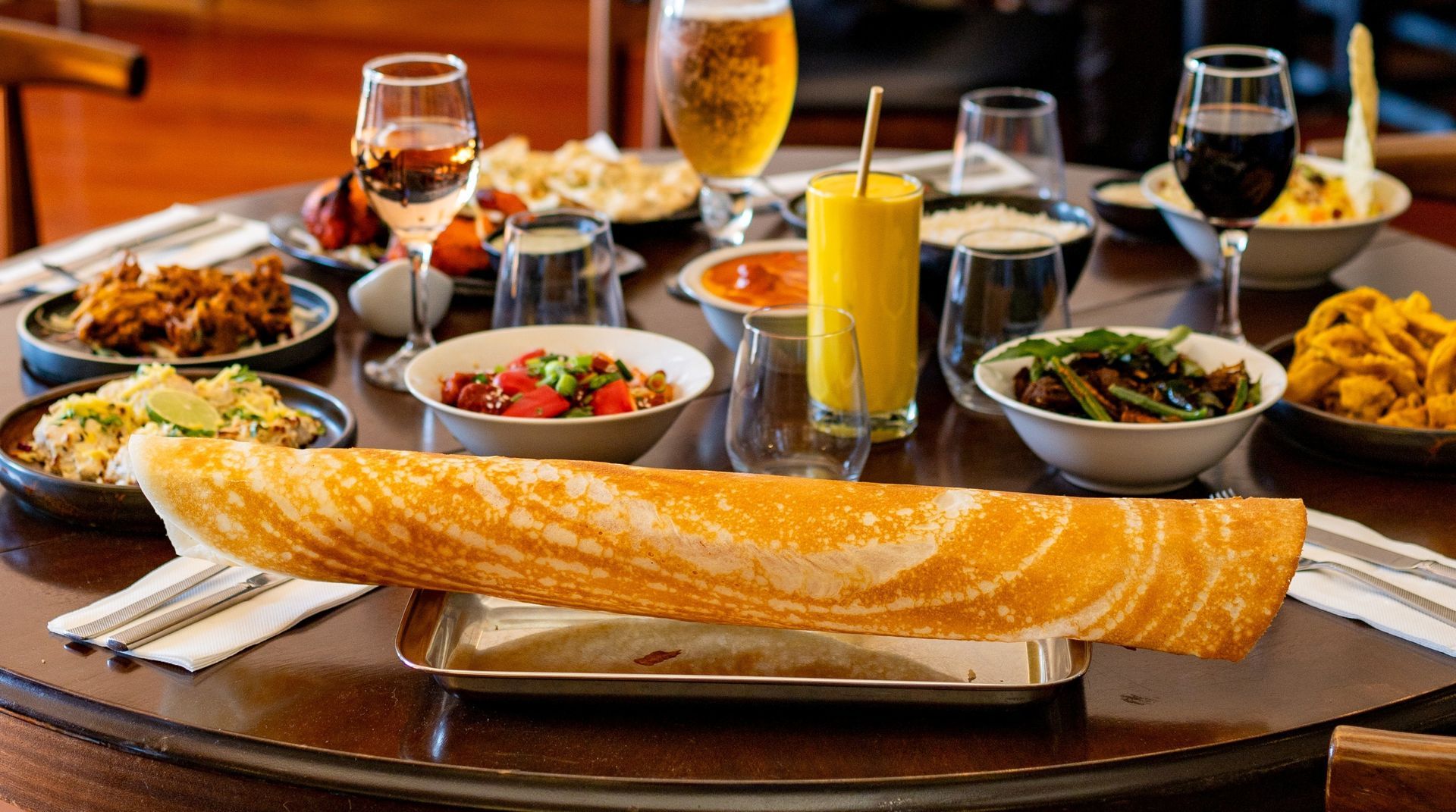
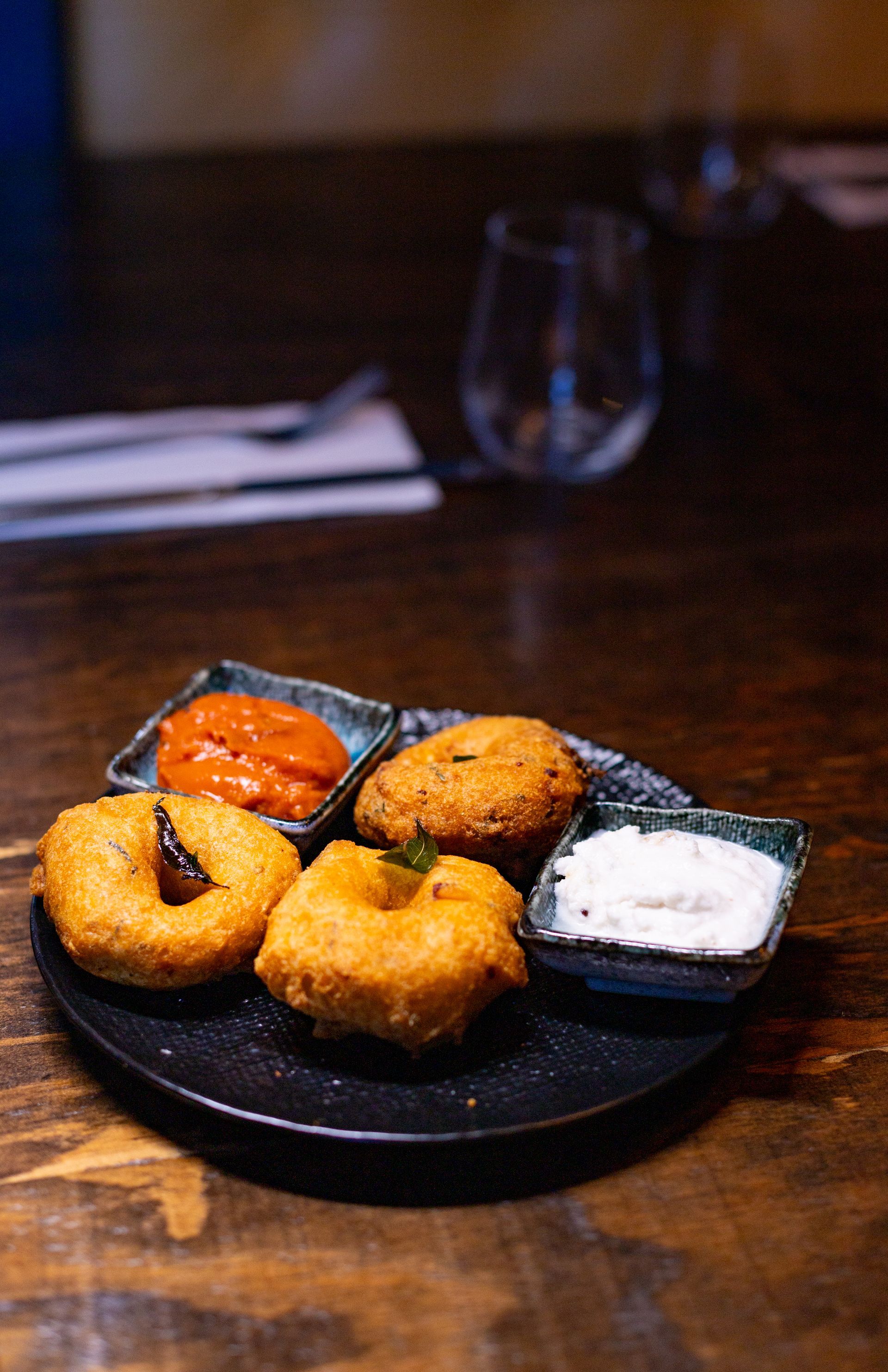
Unlike ordinary flatbreads, Ammu’s dosas – crisp, savoury crepes – require a multi-day commitment.
Raw lentils and rice are soaked and ground into a silky batter which is allowed to ferment naturally overnight. The resulting crepes are served with a wide choice of fillings ranging from spiced potato masala to the layering of egg, cheese, spiced potato and rich butter chicken that form the Ammu Special Dosa.
Behind the Scenes: From High-Level Systems to Culinary Discipline
The precision that goes into running a restaurant operation that offers such a wide variety of dishes, and calibrates them finely to bridge authenticity of tradition with the Kiwi palate and preferences . . . and that also ensures constant freshness and peak quality, is rooted in the respective professional backgrounds of the couple.
The couple met while studying back home in India. Jyothy completed a Bachelor in Computer Applications, while Eldho – drawn to commercial cooking by his childhood fascination of watching his father lead the feast preparations for extended family and community weddings – completed a Bachelor in Hospitality Management.
Jyothy arrived in New Zealand first, in 2011, landing an assignment with Infosys for Telecom (now Spark), systematically diagnosing faults in customer-facing and enterprise software systems. When Eldho joined her in 2013, he brought an equally disciplined background in his own area of expertise, having trained under senior chefs in five-star hotel kitchens across India where storage logic, raw ingredient freshness, and uncompromising food safety standards were drilled to the letter.
In New Zealand, Eldho immediately stepped into the kitchen at Lower Hutt’s famed Little India chain of restaurants. Over several years – often moving between five Wellington region sites to cover senior kitchen posts – he absorbed the operational logistics of high-volume, standardised commercial operations.
That foundational balance – Jyothy’s systems analysis and operational governance paired with Eldho’s technical kitchen discipline – became the modus operandi of Ammu . . . and the unrelenting standard upon which the Ammu operation, the existing business they purchased in 2018, would be based. (To be noted, the Upper Hutt business had been owned by a Sri Lankan family, and Eldho has kept many of its founding dishes from that culture alive in its menu today.)
When the couple first took over the business, one of their priorities was to ensure that – notwithstanding their intention to create an extensive menu and one which would place a priority focus on South Indian dishes – they were also both maintaining and introducing only dishes that would be welcomed and appreciated by their customer base.
“We started off doing weekly Chef Specials. That encouraged people to try new dishes and gave us the market intelligence we needed to know that they would like what we were adding to the existing menu.
“And we did find that they would fall in love with a new dish, and through this demand, we would then incorporate those special dishes into the regular menu . . . and that’s one of the reasons the current menu grew to the huge size (more than 80 dishes) that it now is.”
How do Eldho and his staff keep the ingredients for so many dishes, fresh?
The answer is two-fold:
“First, there is actually only a small number of sauces which each form the basis for large categories of the dishes,” explains Jyothy. “The variety or the variation is what you add to, and how you cook, these base ingredients. It’s those additional determining ingredients and the manner of cooking that turn it into the specific outcome you’ve intended. Some might have more tomato in the base and some might have more cream in the base, for example.
“It’s all permutations and variations on a base theme; that’s a key in Indian cooking.
“So while we might have close to 100 dishes, we only need around 20 different ingredients.”
Eldho trains his chefs to operate their ordering and re-stocking on a “Just In Time” (JIT) basis.
“We project demand very carefully,” Eldho explains. “We almost never make anything in bulk. We would rather run out of a certain ingredient and be upfront with a customer if they order a dish impacted by a shortfall of that ingredient on that day, than be the sort of restaurant that makes a huge amount of something and keeps it in storage.
“Even though you can do that and still be within the food guidelines for the industry . . . no, we won’t do that. We would rather run a tight ship with careful projections and deal honestly with shortages if we run out of the fresh ingredients for a dish. Although, because of our careful projections it is not a frequent thing to run out, but there are times when we do, and we will deal with that with honesty rather than with compromise.”
Quality AND Quantity
The other “secret” – which is hardly a secret, just a tenet of good food – is that Ammu refuses to fall prey to the temptation so many food operations do fall prey to in an ill-advised attempt at increasing profits i.e. that of “stretching” ingredients and resorting to lower quality ingredients.
“We won’t do it,” says Jyothy. “We don’t try to cut down the quality or quantity of ingredients to cut down the cost. It’s against our entire ethos for Ammu.
“For example, after Covid, the specific brand of flour we used became very expensive,” she explained. “But we kept buying it because it produces the best quality naan bread. It would have been easy to have just gone with the flow at the time and taken what was available and avoided the increased cost; but we refused to do that.
“We’re not going to compromise on the quality that our customers are used to getting. We won’t do that with any of the ingredients.
“Our chefs know that. None of our curries are watery, for example. We always make sure they have the optimum amount of cream or other key ingredients in their base.
“Our definition of value for money is not on cheaper or extended ingredients or bulk-made ingredients. NO! Our definition of value for money is that when the customer sits down to their meal, they know that the greatest care and pride has gone into their being delighted with it and they know that what they have paid for that meal was worth every cent.
“So we have a reputation that we’ve built on a certain quality that our customers have become used to. That’s why they keep coming back. They know when they come to Ammu their meals will all be the same high quality – every time.
“That’s the direction we decided to take the Ammu business and brand name in at the outset, and that’s paid strong dividends in terms of customer loyalty. And we will never compromise on that.
“In the same way, we keep a close eye on our social media reviews, and we will promptly make any changes we need to, if we see a review that we’re not happy to have received.”
Service Staff & the Customer Experience
Service staff are central to the customer’s experience at Ammu.
“For example, we will go to the table multiple times to make sure that the customer is happy,” Jyothy says.
“Maybe we might find that we got the spice levels wrong and the customer wanted something slightly less hot or slightly more hot. We will not hesitate to take the curry back and make another version according to their taste.
“We now have a strong customer base in Upper Hutt, with customers who come in every week, and some who will always come in for lunch every Tuesday, or dinner every Friday . . . our ‘regulars’.
“And whenever any of our regular customers go on holiday and come back and say, ‘We really missed your curries’, that makes us feel very happy, because they must have had other Indian food where they went – but they missed our curries.
“Or if not Indian food when they were away, they must surely have had other delicious food where they went, but it’s our food they missed.
“It’s the ultimate validation of our quality.”
The Indian restaurant and takeaway scene in Upper Hutt especially. is a very competitive one.
“There are about 12 other Indian restaurants in Upper Hutt. Two of them are within 100 metres of us. And there are more than 15 in Lower Hutt and Petone.
“So the fact that we’ve built such a strong, repeat customer base in such few years means what we’re doing and what we’re offering is hitting home . . . and we believe it’s both the quality of the meals and the standard and personalisation of the service.”
The Culture & Consistency Behind Quality Cuisine
Any chefs joining the Ammu team are trained very specifically in Eldho’s recipes, regardless of how experienced they are.
“That applies to even the most experienced chefs,” says Jyothy. “Because, in Indian cuisine, there are so many different ways to make the same dish, so it’s central to our consistency.”
Most of the Upper Hutt operation’s staff have been with Ammu for a minimum of four years, and one has been on the Ammu team for six years.
“We treat them like family. If they need support from us in the way that a family might support them, emotionally or with what is going on in their own lives, we are there for them. If a person is happy in their work, if they are relaxed and have no stress because they are in a friendship-based environment, this makes for pride of product. If people come to work happy, they are doing their work happy.
“It also makes it easier to foster continuous improvement. It’s easier to convey to them what any customer says to us at the table or when leaving – including if there’s ever anything negative.”
Jyothy and Eldho believe in – unusually for the restaurant trade – a very flat, “horizontal” management and staff structure.
“Usually there would be an invisible but distinct line of separation between owners and staff,” says Jyothy. “We don’t operate that way. We believe that if you remove that line of separation, the staff are more willing to come to us with observations and problems or suggestions for improvement.
“My staff call me chechi, which is Malayalam (a common Indian language of Kerala) for ‘older sister’.”
The Masterton operation’s chefs are quite a young crew, and call Eldho “chettan”, meaning “older brother”.
A happy work environment in the restaurant trade is a productive work environment, and a productive work environment is, in turn, paramount to the actual food and service quality.
“You can’t achieve that on the surface without that sort of supportive structure underneath it. The visible is always dependent upon the invisible. And we have proven that.”
Why Masterton?
What drove the couple to open the Masterton operation last October?
“For a few years we had a plan to expand,” Jyothy explains. “Initially, we thought of Porirua, but we have such a lot of customers who have for a long time been driving over to Upper Hutt to eat here that it felt like the right thing to do to open in the Wairarapa, especially because there are very few pure South Indian dining options there.
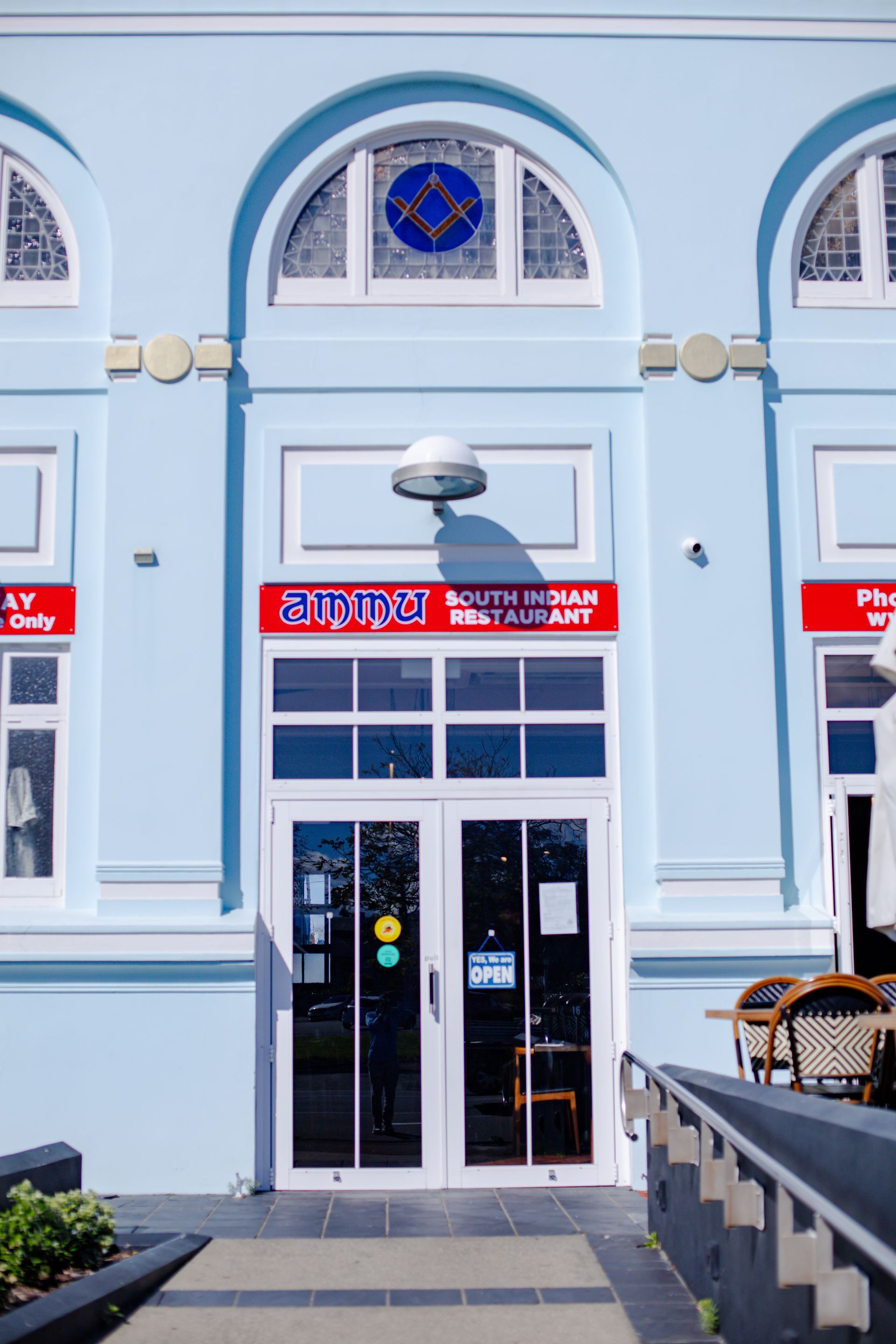
“And when we saw that beautiful old landmark blue and white building in Chapel Street, we felt like the decision was a natural one.”
Ammu Masterton is located at 109 Chapel Street, Masterton.
Ammu Upper Hutt is located at 851 Fergusson Drive, Upper Hutt.
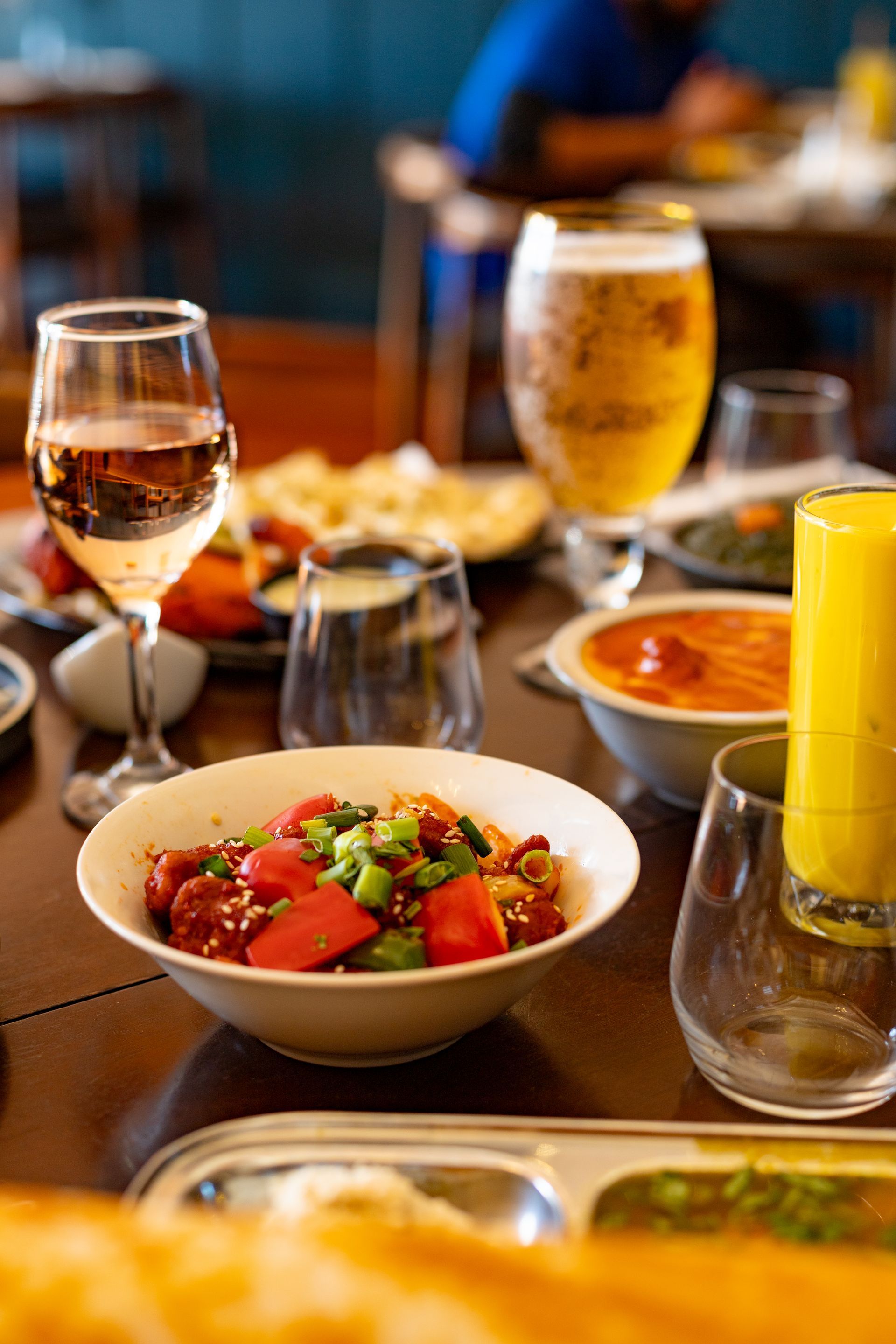
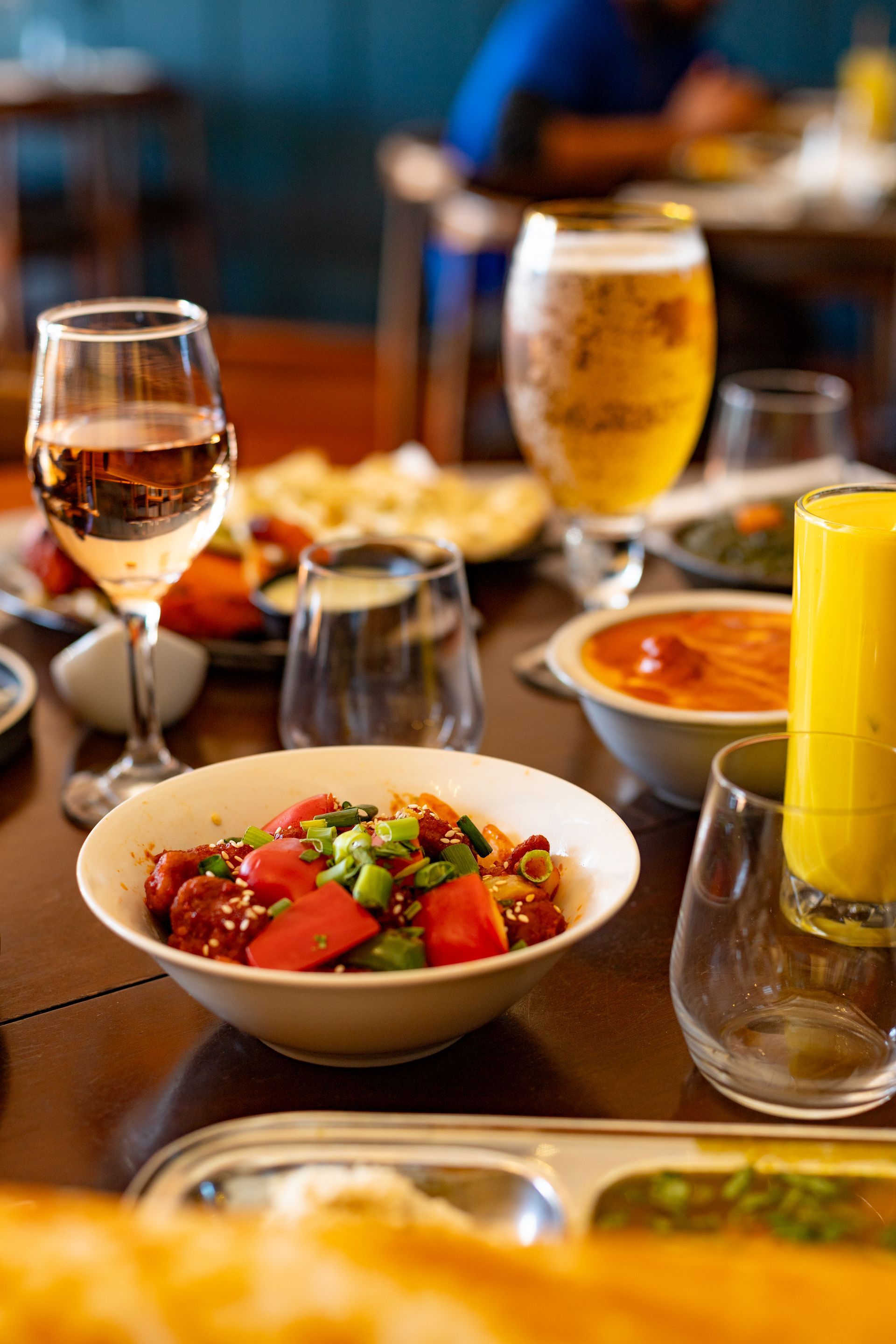
Both are licensed to serve a full range of alcohol and have a BYO licence for wine. Their range of beer (always a great pairing with Indian dishes, both North and South) includes brands like Kingfisher that is wildly popular in India, as well as the usual Kiwi favourites, and also low and no-alcohol options.
Soft drinks as well as well-known Indian beverages like mango lassi, salt lassis, and sweet lassis, and freshly brewed Indian tea are also served.
This profile is an independent commercial showcase. The Publisher accepts no liability for services or transactions entered into with Featured businesses. Read our full Disclaimer.
© 2026 Wairarapa Business Showcase. All rights reserved. This Feature article is protected by Copyright and may not be reproduced elsewhere.